
Florida’s waters are home to some of the most extraordinary species on Earth, but few are as unique, or as imperiled, as the smalltooth sawfish. Once common across the Southeast, this remarkable ray is now critically endangered, surviving only in pockets of South Florida and the Keys. This month, for World Wildlife Conservation Day, we’re shining a light on the smalltooth sawfish and the urgent need to protect one of Florida’s most ancient and misunderstood species.
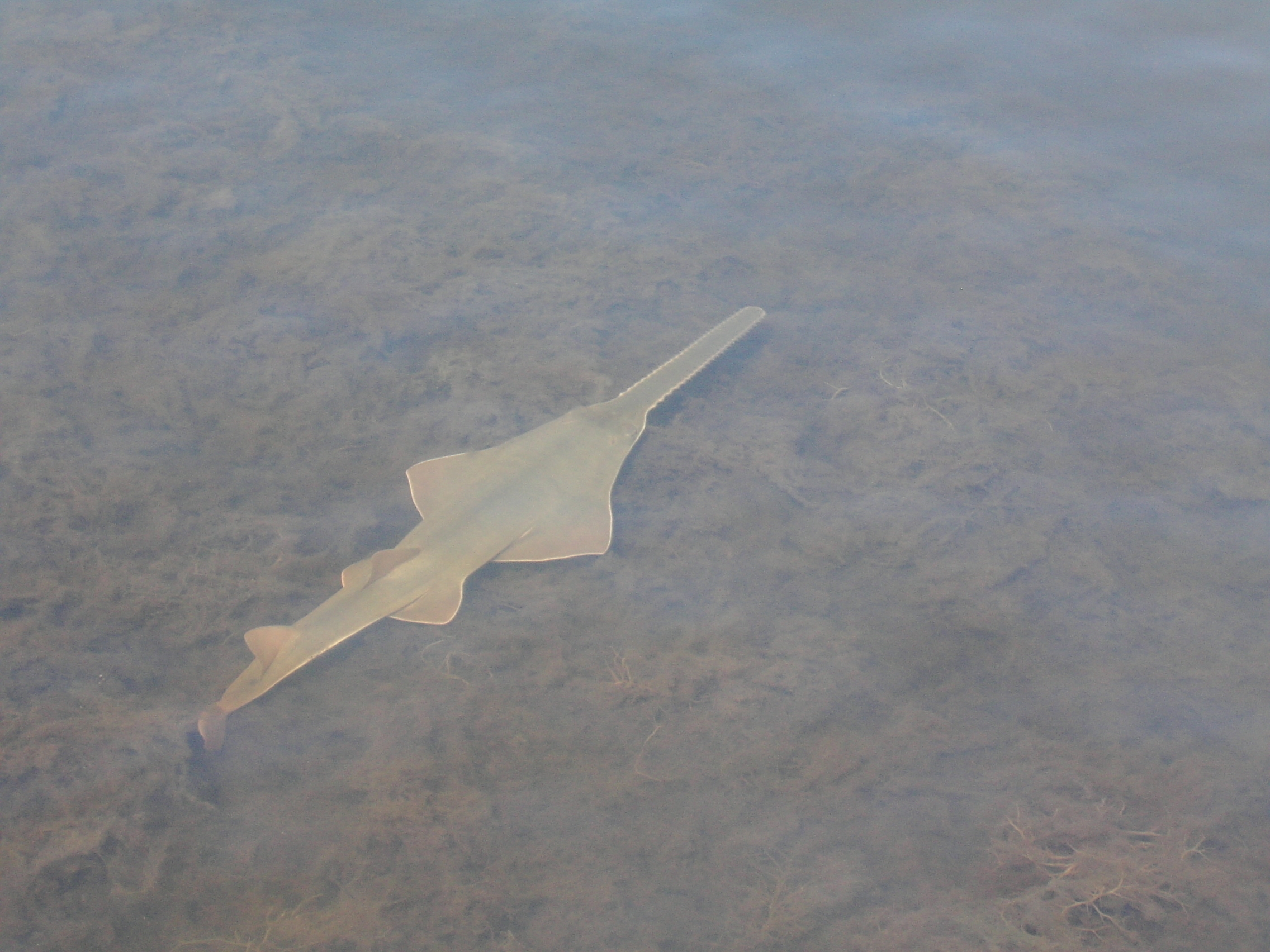
Smalltooth Sawfish by FWC
A Living Relic of the Prehistoric Seas
The smalltooth sawfish (Pristis pectinata) looks like something from another time, and that’s because it is. With a lineage stretching back more than 50 million years, this species evolved its distinctive rostrum, or “saw,” to detect and stun prey using thousands of electroreceptors.
Though sawfish might at first resemble a shark, they are actually a type of ray, close relatives of stingrays and skates. Like other rays, smalltooth sawfish have flattened bodies, gill slits located on their underside, and pectoral fins fused to their heads, giving them a graceful, wing-like profile as they swim. Adults can reach over 14 feet in length, with their long, tooth-studded rostrum making up nearly a quarter of their body. Their silhouette gliding through shallow flats is unmistakable and unforgettable.
Once Common, Now Critically Endangered
Smalltooth sawfish once ranged from North Carolina to Texas, but decades of habitat loss, overfishing, and unintentional capture in nets severely reduced their numbers. Today, they are protected under the Endangered Species Act, and South Florida is now the last stronghold for the U.S. population.
Key threats include:
- Coastal habitat loss, especially in mangroves and estuaries where juveniles grow
- Bycatch, where sawfish become entangled in nets and fishing lines
- Pollution and declining water quality
- Climate impacts, including rising temperatures and stronger storms
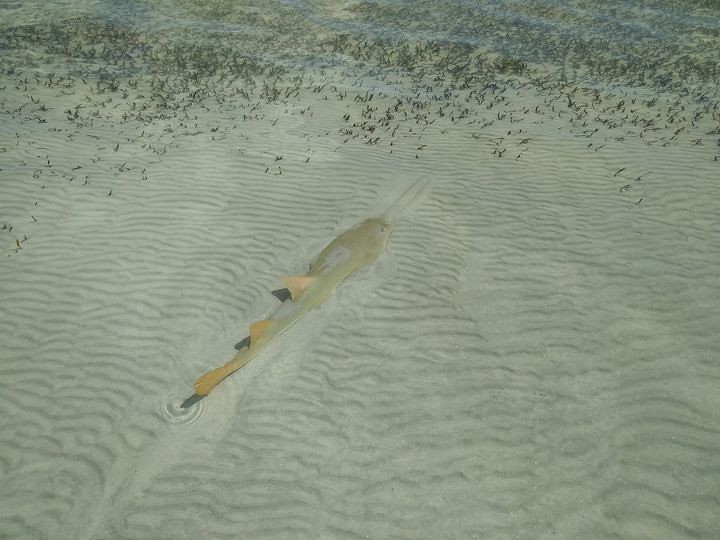
Smalltooth sawfish by Ryan Baer | NPS photo
Despite these challenges, Florida’s remaining population shows signs of resilience, a testament to the importance of preserving and restoring their habitats.
Where Sawfish Still Survive in Florida
Today, smalltooth sawfish are mainly found in a handful of regions that still offer the sheltered, shallow-water habitats they rely on:
- Southwest Florida, including the Ten Thousand Islands, Caloosahatchee River, and Charlotte Harbor
- The Florida Keys, where clear, warm waters and mangrove shorelines create ideal juvenile habitat
- Everglades National Park, one of the last strongholds for young sawfish seeking calm, protected estuaries
These locations all share crucial features: extensive mangrove forests, seagrass meadows, and estuarine river systems that provide food, shelter, and protection from predators. Juvenile sawfish spend their earliest years in these calmer waters, using mangrove roots and shallow flats as safe nurseries before venturing into deeper coastal zones as adults.
Why Sawfish Matter
Every species plays a role in Florida’s ecosystem, but smalltooth sawfish hold a particularly important place. As top predators, they help maintain balance in coastal food webs, shaping the health and behavior of the species around them. Their presence is also a powerful indicator of ecosystem quality, signaling healthy estuaries, mangrove forests, and nearshore habitats. Since sawfish are long-lived and slow-growing, their recovery offers insight into both the resilience and fragility of our oceans.
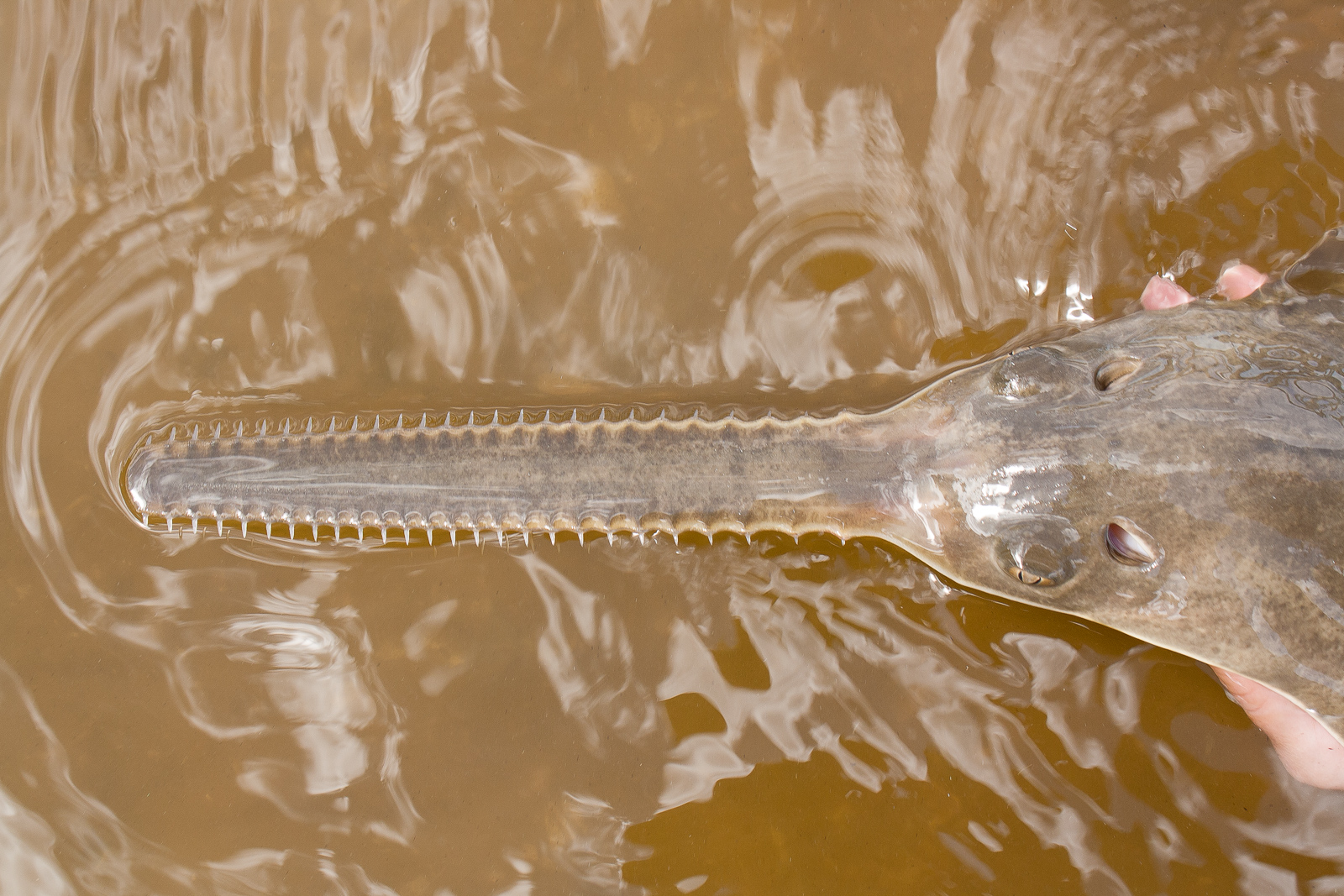
Close-up of sawfish rostrum by FWC
Beyond their ecological value, sawfish carry cultural significance as well; their rostrums were once used by Florida’s Indigenous people in ceremonies and tools, tying this ancient species to Florida’s deeper human history.
Protecting Sawfish Starts with Awareness
Smalltooth sawfish are protected under both state and federal law, and knowing how to respond if you encounter one can make a real difference for their survival. Anglers and boaters are among the most important partners in sawfish recovery, because many interactions happen unexpectedly in shallow coastal waters. If you encounter a sawfish while fishing or boating:
- Do not remove it from the water
- Cut the line as close as safely possible if accidental hooking occurs
- Never attempt to handle the rostrum as it can injure both you and the fish
- Report sightings to scientists at 1-844-4SAWFISH or sawfish@myfwc.com
These reports help researchers track recovery progress, identify key nursery habitats, and respond quickly to unusual events.
Beyond on-the-water encounters, each of us can help protect sawfish by reducing pollution and fertilizer runoff, safeguarding mangrove and seagrass habitats, choosing sustainable seafood, and supporting conservation organizations working to restore Florida’s coastal ecosystems. Every action (big or small) contributes to giving this ancient species a fighting chance.
This World Wildlife Conservation Day, we invite you to reflect on the wildlife that makes Florida special and commit to protecting the species that need us most.