
“Start small” is often good advice when starting your garden. You can follow this with tree-planting projects in January too. By choosing to start with saplings or bare root trees, you’ll discover more benefits than you might imagine.
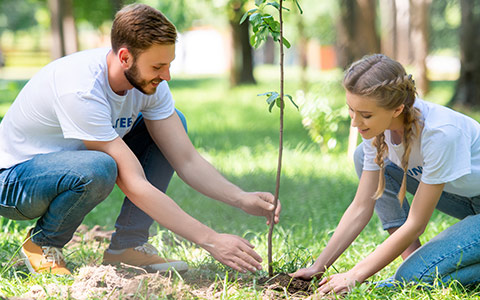
“Saplings” generally refers to young trees, bigger than seedlings, but not mature. They have smooth bark, a flexible trunk, and are still developing a permanent root system. Saplings can be pencil-sized twigs, or larger plants usually in 1-to-3-gallon pots.
“Bare root” trees are also young trees, sold when dormant, but without soil. They need to be planted while still dormant to thrive. Sometimes they are called bare root saplings.
Benefits of Starting Small
Saplings can quickly catch up to larger plantings.
Larger trees tend to take longer to establish root systems after transplanting. You may see little growth in the first few years as they put energy into growing a larger root system to support their mass. Saplings however establish roots quickly and can start putting on new growth in one season. They can catch up in the first few years!
Smaller trees do require more pruning earlier to develop structural strength, but this pruning is easier when trees are small.
Saplings are easier to plant correctly and successfully.
Bigger trees have a bigger root system that might need to be trimmed or cut, which can damage the tree if not done correctly. Saplings and bare root trees are easier to work with when transplanting and usually lack densely-tangled roots.
These little, young trees often take just a few shovels to dig a large enough hole. Bigger trees require a hole a few times larger than the root ball of the plant.
Saplings conserve water.
Smaller plants require less water at planting and need a shorter irrigation period afterward. As they establish, they are often less vulnerable to drought or flooding, while larger trees typically require longer, more intensive irrigation.
Planting small can also help you save money. If you’re planting more than one or two trees at home or helping a community plant hundreds of trees, the lower cost of smaller plants can add up to sizeable savings.
Choosing Keystone Trees
Keystone plants are native species vital to sustaining food webs and ecosystems. These impressive plants support an abundance of caterpillars and other insects that are essential food sources for birds and other wildlife. Baby birds need to eat thousands of caterpillars to grow to adulthood, and bird populations are declining, in part due to lack of food supply.
When selecting trees to plant, native species of oak are important to consider in Florida. These keystone trees host an astounding 395 species of caterpillars. Just a single tree can produce thousands of leaves and flowers to support caterpillars and adult insects alike.
Native Plant Finder, a resource developed by the National Wildlife Federation, helps identify keystone plants by region across the country. Try it for yourself to find the perfect plants for your area.
Your local native plant nurseries can also help you select the right tree species for your space by considering factors like soil type, sunlight, moisture, and mature size. They can also provide guidance on planting, watering, and long-term care to help your tree thrive and support local wildlife.
Celebrating Florida Arbor Day
Arbor Day was established to celebrate the beauty of trees and their vital role in our environment. In Florida, Arbor Day dates back to 1886, making it one of the earliest Arbor Day observances in the nation. It’s officially celebrated on the third Friday in January, when cooler temperatures create ideal conditions for planting trees.

Arbor Day is a reminder of hope for the future, as trees provide shade, wildlife habitat, cleaner air and water, healthier communities, and lasting natural beauty. Floridians can take part by joining an Arbor Day event happening around the state or planting a tree at home. Small trees are especially well suited for families, offering kids the chance to plant a tree of their own, help care for it, and watch it grow alongside them. This is an investment in both the landscape and the next generation of conservationists.