
As the holiday lights go up and the air begins to feel a little cooler (for Florida standards!), December is a prime month to roll up your sleeves and get your edible garden going. Whether you’re growing in containers, raised beds, or home gardens, this is one of the most productive times of the year in the Sunshine State. Here’s how you can make the most of it.

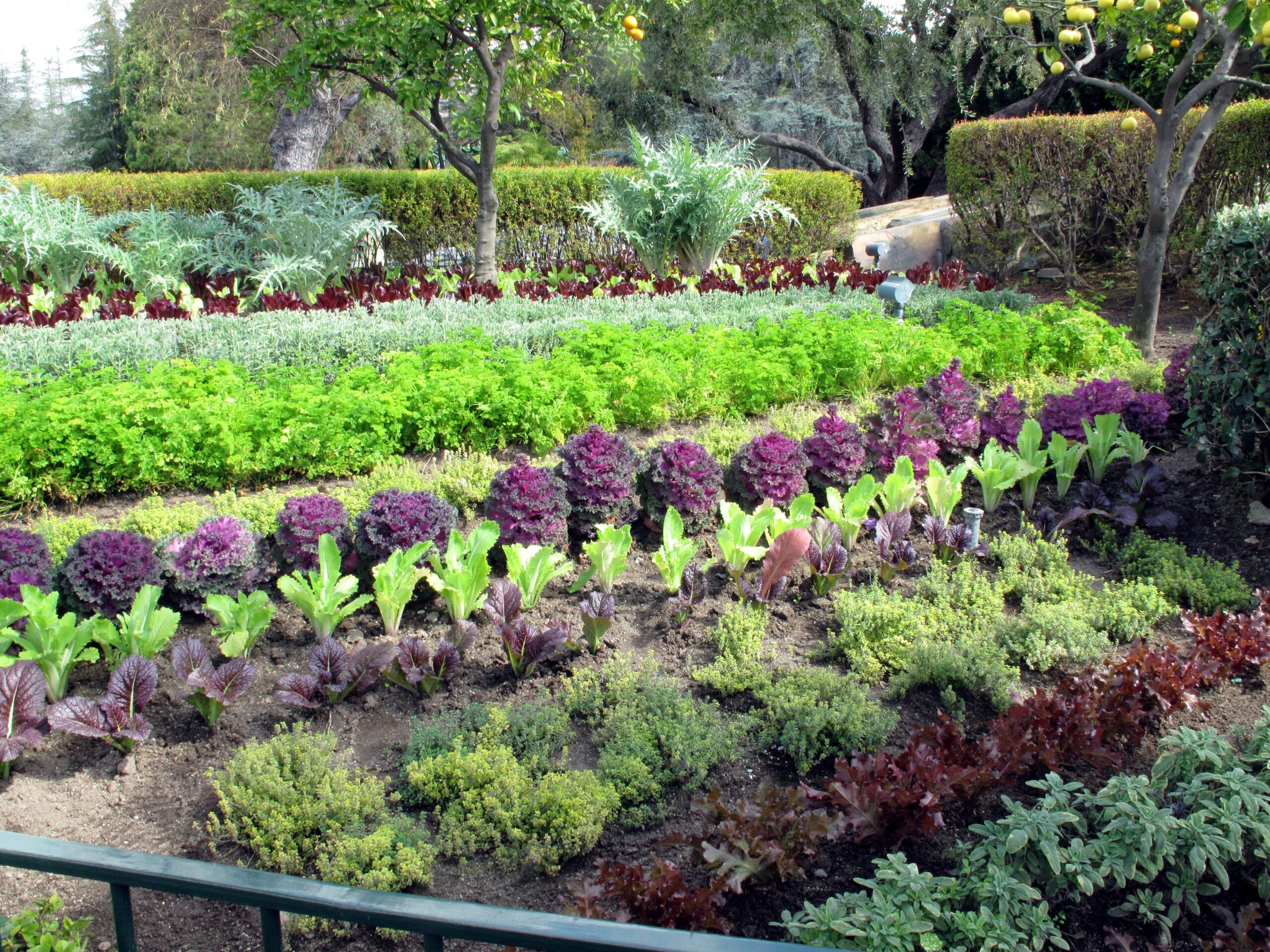
Edible landscape garden by Myrna Litt
Most of the year, Florida gardeners battle heat, humidity, and wildlife that may present challenges. But come December, many of those pressures ease up: soil temperatures moderate, weeds and disease threats drop, and the plants we’re about to introduce thrive in the cooler end of Florida’s growing season. If you plant now, you can harvest fresh, home-grown vegetables in the months ahead.
Planting dates for some vegetables vary widely across the state. While most leafy greens can be planted in all regions in December, South Florida gardeners can plant their tomatoes and peppers now! According to the University of Florida IFAS Extension, the planting calendar for December is tailored to Florida’s unique climate zones and gives you a roadmap for what to plant and when.
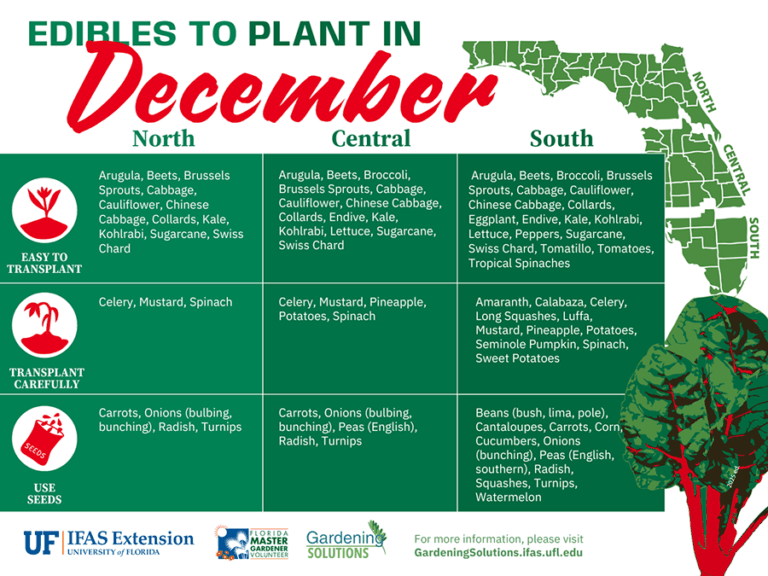
Graphic by UF/IFAS Gardening Solutions – University of Florida
Tips for Success
- Start small: If you are new to gardening, consider starting a small garden with a few of your favorite vegetables.
- Choose the right location: Even in winter, light matters. Most plants need 6–8 hours of daylight or at least bright filtered light for containers.
- Prepare your soil: Add compost or aged manure to get your plants off to a good start. It helps manage soil moisture, supplies nutrients, and reduces the need for fertilizers.
- Water smart: Check the soil regularly. It should be moist at the depth of the roots. This helps prevent either overwatering or letting the soil dry out.
- Protect your young plants: While wildlife activity drops in winter, keep an eye out for slugs, snails, and any leftover warm-season bugs. A light mulch can help regulate soil temperature and moisture.
- Use Integrated Pest Management (IPM): Monitor your garden regularly to identify any potential challenges early. Rather than using broad-spectrum pesticides, encourage beneficial insects, rotate crops, and use physical barriers when needed. IPM focuses on managing garden “guests” thoughtfully rather than eliminating them entirely, keeping your garden healthy and wildlife-friendly. An example of this includes attracting ladybugs to control aphids, a common challenge in Florida’s winter.
- Harvest regularly: Many of these plants (especially greens) appreciate light, frequent harvests. Keep picking a few lower leaves for your dinners and you’ll encourage steady growth.
- Consult the professionals: Experienced gardening friends and nursery staff can provide a wealth of information and support.
- Keep a garden journal: Tracking planting and harvesting dates, pest management, produce yields, and variations in temperature and rainfall can help grow successful gardens year to year.
Why This Matters for Florida's Wild Places
By planting your own edible garden this December, you’re not only growing fresh food, you’re also reconnecting with Florida’s land in a meaningful way. Home gardens reduce food-miles, encourage biodiversity (especially if you include pollinator-friendly herbs), and remind us that conservation begins in our own backyards.
Whether you’re a seasoned gardener or just planting your first row, December offers a low-stress, high-reward window to start. Pick up your seeds now, set aside a sunny spot, and get growing. Before you know it, you’ll have fresh, home-grown greens and vegetables to enjoy—and a garden that reflects your commitment to wild and healthy Florida.
Here’s to a productive December and a delicious, sustainable year ahead!